Method
The data at a glance
- Models
- 126
- Brands
- 14
- Countries
- 34
- Prices checked
- 5,326
- Verified on an official page or an archived copy of it
- 5,311
- Left out (price on request or not visible)
- 15
Last check: 21 October 2026
This page explains where our numbers come from, how we check them and what the labels on the site mean. It is written for retailers, journalists and anyone who wants to verify our work. Every rule here applies to every page of the site.
Last updated: 13 October 2026.
Where the data comes from
Luxe Charts follows the prices of luxury bags and jewellery in Europe. The boutique price comes from the brands’ own websites, either live or as archived copies. Pre-owned prices come from a different source, and the two are never mixed.
Official brand websites. The price new in the boutique is the price the brand publishes on its own website. A price read on the official site is verified with that single source. We read it from dated copies of the brand’s product pages: copies we save ourselves with the Wayback Machine of web.archive.org, where the brand allows it, and copies already kept there by others. On the same page we check the price, the currency, the country, the size, the material and the full product code.
Archived copies of official pages. For the price history we use copies of the brand’s own pages kept by web.archive.org. A copy of an official page counts as an official source with a certain date when it shows the price, currency, country, product code and material. The date we publish is the date of the copy, and the link to the copy sits next to the price.
Some websites display the price with a script that the copy does not keep. In that copy the price remains only in the structured data of the product page, which is the offer the brand publishes for search engines. We use it only if the offer is for the product on the page, if currency and country match the website and if the visible text of the copy does not contradict it. If the page says “price on request” or shows a different price, that figure does not count. In the table of price changes these readings are marked “structured data”. We never use the tracking data of a page.
In some archived Cartier copies the price sits in a field whose code is labelled “from”. On 9 October 2026 we checked all 295 such copies: no word such as “from”, “à partir de” or “ab” is visible next to the price, so the figure is the full price of that product and not a starting price.
Secondary sources. A price reported by the press or by specialist blogs goes online only if at least two independent and reliable sources agree. The page then names both sources and marks the price “secondary source”. If the sources disagree, the price is not published. Two sources are not independent if one takes its figure from the other.
Retailers’ listings. Prices of pre-owned items are never collected by hand and never taken from other websites. They come only from the authorised feeds of retailers. A listing price is an asking price.
Every price states exactly which size, material, country, currency and date it refers to. The same model in another material can have another price, which is why a price is tied to the full product code. When we cannot check a price, we do not show it.
One reference size for each piece of jewellery. Each bracelet, ring or necklace has a single reference size, chosen when the model enters the site and never changed, so that its price can be compared over time. For bracelets it is the size the brand shows by default on the product page (size 17 for Cartier), for rings size 52, a 52 mm inner circumference (US 6 at Tiffany), and for necklaces and earrings the only version published, with its length. The price and the product code we record are always those of the reference size, and the page names it. We have no data on which sizes sell most, so the choice follows the brand’s default size.
How we check prices
The price new in the boutique is the indicative public price published by the brand. It is a reference to measure how much you save on a pre-owned item. It is not a price we sell at, and we never link to the boutique.
We record a price when we find it on an official page, and we write down the date of that check. The date next to a price is always the date of the check, or the date of the archived copy. It is never the date of an increase announced somewhere else. When the page says “€10,300, seen in April 2024”, it means we saw that price in April 2024. It does not say the price started that month: the brand may have changed it between two of our checks.
When a brand publishes the same price in every euro area country we read, the history follows four reference markets: France, Italy, Germany and Spain. Every price level and every change in the chart, and every percentage on the site, comes only from checks in those four countries, so that no change appears just because two checks come from different countries. A check in another euro area country counts when it confirms the price in force in the reference markets on that date, between their first and last check. It fills a period that would otherwise be unchecked, but it never adds a new price level. Checks with a different price stay in our data and in the table of prices by country, not in the chart.
One or two countries, for brands with a single euro price. For some brands the boutique price has been the same in France, Italy, Germany and Spain in every one of our checks since 2024. When the latest confirmed price of a model comes from one or two of these countries, the model page says which country and which date, and adds that in the euro area this brand has had the same price since 2024 in all our checks. We never count a country we did not read, and the price history of the model still comes from archived copies of the four reference markets.
Last confirmed price. Some brands do not let the archive save their pages on request. For their models the price shown is the latest one we found in a dated copy of the brand’s page, and the page says when it was last confirmed (for example “Last confirmed price, March 2026”). A new model goes online only if that price is less than 180 days old. Every month we look for newer copies of every model and update the price when one appears.
When we rebuild a brand’s history from archived copies, we use only the version of the product that has the same code, material and colour across time. A point with no archived copy is left out, or it needs two independent sources.
Some countries have since adopted the euro and published past prices in their old currency: Bulgaria in lev (BGN) until 2025, Croatia in kuna (HRK) until 2022. We keep the original value in our data and, for charts and comparisons, convert it to euro at the official fixed rate (1.95583 BGN and 7.53450 HRK per euro), rounded to the euro. Prices in the currencies of countries outside the euro area are shown in that currency and are not converted.
If a brand shows “price on request”, we do not show a price. A price on request is never estimated.
The table “All price changes” under each chart lists every price we have seen, the date of each check, the change and a link to the source: the official page for today’s price, the archived copy for older prices.
The vertical axis of a chart does not start at zero, so that changes of a few hundred euros on prices of several thousand stay readable. Today’s price is written in large type above the chart and the first price under it.
The Boutique Index applies the same rules to a fixed basket of bags: each bag’s price at the last check up to 31 December 2020 is 100, a price holds until a check shows another one, and the months we did not fully check are drawn in a lighter grey.
Periods we did not check
The price line on a chart is a staircase. A price holds until the next check shows a different one.
When more than 180 days pass between two consecutive checks, we cannot say what happened in between. In that stretch the line is drawn in a lighter grey, with the same thickness, and the note on hover says “We did not check the price in this period”. The step that closes the stretch is lighter too. A line under the chart says “Lighter line: months we did not check the price”. The rule applies whether or not the price changed, and it is the same 180 days for every series. We never draw a solid line through a period we did not look at, and we never fill it in with an estimate.
Prices that differ by country
Some brands publish the same price in every euro area country. Others, jewellery houses in particular, publish a different price for each country. We keep each country apart.
When a price differs by country, the page lists the countries in order of price, from the cheapest, with the price and the difference from the cheapest. The first five are visible and the others are under “See all countries”. The headline names the cheapest country, and the line under it says how far apart the cheapest and the dearest are.
When a price is the same everywhere, we say so and show a single price. When it is on request in some countries, we leave those countries out and say so.
The typical price and the 8 listings rule
Where a model page shows listings, each one is compared with a typical price. This is how it is calculated.
- A group of comparable listings. A listing is compared only with the other listings of the same model page, that is the same model in the same size. Listings of another model or another size are never in the group.
- The delivered price. For each listing we add the buyer’s fee to the listed price. When you choose a delivery country we also add the shipping to that country, and a listing whose seller does not ship there is left out of the comparison for that country.
- The central price. The central price is the middle value (the median) of the delivered prices in the group.
- The typical price. The typical price is the range from 90% to 110% of the central price. A listing below 90% is labelled “under typical” (shown in green). A listing between 90% and 110% is “in line with typical”. A listing above 110% is “over typical”. The label always comes with words, never with colour alone.
- The minimum of 8. A verdict is given only when the group has at least 8 comparable listings live at that moment. With 1 to 7 comparable listings, the model page shows them from the lowest price, buyer’s fee included (or from the lowest delivered price when you choose a delivery country), each with its link to the retailer, and says that there are too few listings for a typical price: no label, no bar and no percentage.
- The share of the boutique price. When a model has a published boutique price and a verdict, the page says where the typical price sits against it, for example “pre-owned, you find it between 71% and 87% of the new price”.
The limits of 90% and 110% are the ones in force. Any change to them is dated on this page.
How we order listings
Listings are sorted from the lowest price, buyer’s fee included, or from the lowest delivered price when you choose a delivery country. The order never depends on a payment from a retailer, and no retailer can buy a better place.
Each retailer carries one line about who authenticates the item, with what guarantee and at what cost. We write it only from the retailer’s public terms, with the source and the date we read them. For some retailers authentication is compulsory above a price, for others it is optional or absent. The line says which.
We do not publish reviews, star ratings or averages of ratings from other sites, on products or on listings.
Words we use
Check. A time when we read a price on an official page or on an archived copy of it.
Archived copy. A copy of an official page kept on web.archive.org, with a certain date.
Boutique price. The indicative public price published by the brand.
Asking price. The price a seller asks for a pre-owned item. We always say “asking price”. We never say “value” or “selling price”, because we do not know what an item sells for.
Listing. One pre-owned item offered by one retailer.
Delivered price. The listed price plus the buyer’s fee, and the shipping when you choose a delivery country.
Central price. The middle value of the delivered prices in a group of comparable listings.
Typical price. The range from 90% to 110% of the central price.
Comparable group. The listings of the same model page: the same model in the same size.
What we do not do
We do not authenticate anything. The checks on our pages help you compare an item with the facts the brand publishes. They do not prove that an item is genuine. Authentication is the retailer’s job and the retailer’s terms apply.
We do not sell anything. Luxe Charts is an information site, not a retailer: whatever you buy, you buy from the seller, under its terms. How the site is funded, and why this never changes prices, order or labels, is explained in the Affiliate disclosure.
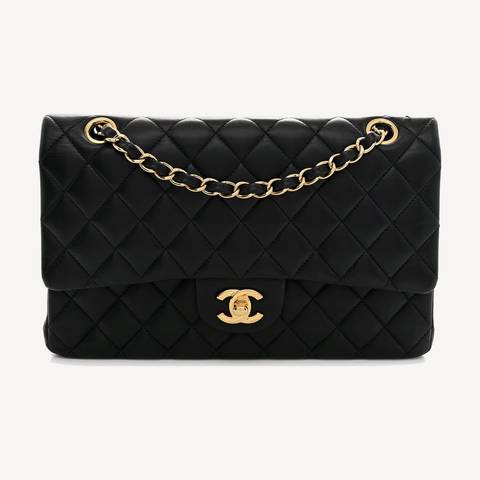
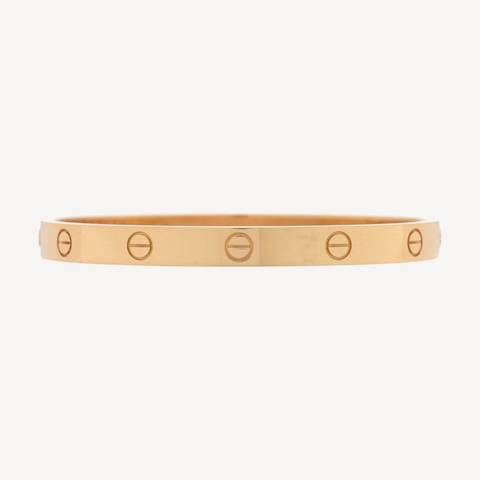
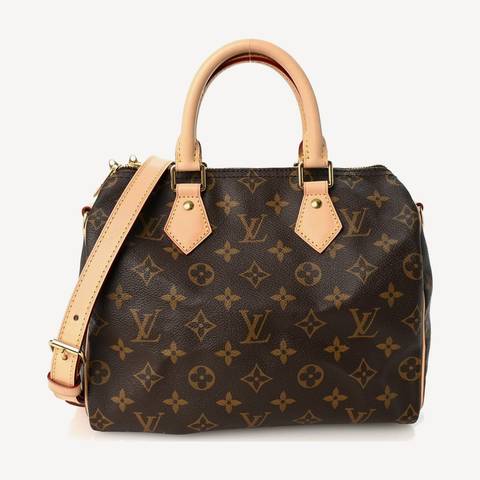
We do not take photographs from brand websites. The photo of each model comes from a pre-owned retailer that sells that model. Photographs of atmosphere come from free licences.
Luxe Charts is independent. It is not affiliated with Bottega Veneta, Celine, Chanel, Dior, Fendi, Gucci, Loewe, Louis Vuitton, Prada, Saint Laurent, Bulgari, Cartier, Tiffany, Van Cleef & Arpels or any other brand named on the site. All trademarks belong to their respective owners.
Corrections
If you find a wrong price, write to us from the Contact page, giving the page and the source. We correct the figure and the date of the check, and when a correction changes a rule we write the date of the change on this page. Every correction to a figure we have published is listed on the Corrections page, with its date.